
Research
Decoding Brain Chemistry to Treat Addiction and Neurological Disorders
MISSION STATEMENT
Our lab investigates the cellular pathways and genetic drivers behind alcohol use disorder and neurodevelopmental conditions to design innovative, targeted therapeutics. By combining state-of-the-art stem cell modeling, drug discovery, and real-time brain imaging tools, we aim to transform how complex psychiatric and substance use disorders are treated.
Our lab studies how signaling pathways in the brain drive addiction and psychiatric conditions, with a primary goal of discovering new, targeted medications for alcohol and substance use disorders. Currently, FDA-approved options for addiction are limited, and new therapies are urgently needed.
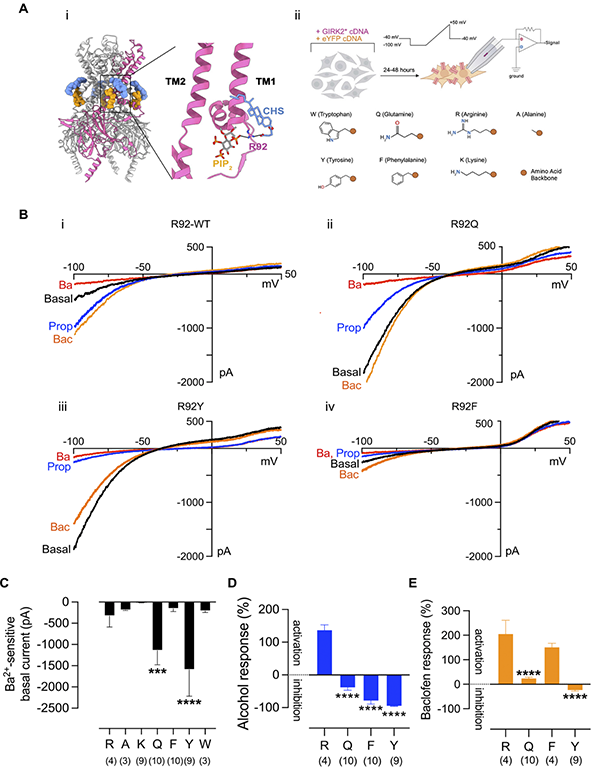
We focus on GIRK channels—specialized "gatekeeper" proteins on brain cells (neurons) that act as natural brakes on brain activity. By combining structural biology, biochemistry, live-cell imaging, and behavioral studies, we explore how these channels function and how drugs of abuse alter them over time.

Contact Us
Principal Investigator
Paul A. Slesinger, PhD
Lillian and Henry M. Stratton Professor of Neuroscience
Departments of Neuroscience and Pharmacology
Director, Center for Neurotechnology & Behavior
Senior Associate Dean for Student and Postdoctoral Affairs
Areas of Research
1. Developing New Therapeutics for Alcohol Use Disorder and Neurological Diseases
• Alcohol Use Disorder: Alcohol affects the central nervous system through a complex web of pathways, making Alcohol Use Disorder (AUD) difficult to treat. Ethanol directly targets GIRK channels to alter brain cell activity. We use advanced high-resolution imaging (cryo-EM) to visualize how alcohol and potential drugs interact with these channels. This allows us to design and screen novel compounds—such as our recently discovered molecule, GiGA1—to target GIRK channels and reduce alcohol-related behaviors.
• Keppen-Lubinsky Syndrome: Mutations in the GIRK2 channel (KCNJ6) cause Keppen-Lubinsky Syndrome (KLS), a severe condition causing growth retardation, developmental delays, and movement issues. These mutations transform GIRK2 from an inhibitory channel into an overactive, malfunctioning channel that hyper-excites neurons. We are using structural studies, computer-guided drug screening, and hiPSC patient-derived neurons to discover first-of-their-kind inhibitor drugs to block these mutated channels and restore normal neuron activity.
2. Modeling Human Brain Disorders with Stem Cells
Alcohol Use Disorder, Schizophrenia, and Drug Addiction are complex conditions influenced by genetics. To understand how specific genetic risk factors alter human brain function, we use human induced pluripotent stem cells (hiPSCs) to generate human neurons:
• Genetics of Alcohol Use Disorder: As part of our NIH-funded Collaborative Studies on the Genetics of Alcoholism (COGA), we turn patient-derived stem cells into living human neurons to test how genetic risk variants impact cellular function and response to alcohol.
• Neurodevelopmental Disorders: In collaboration with the Dr. Kristen Brennand at Yale Univ, we use patient-derived neurons to study how mutations in key synaptic genes (like NRXN1) disrupt neuronal growth and signal transmission in Schizophrenia and Autism.
3. Real-Time Optical Tools for Brain Imaging
As part of the NIH-funded BRAIN Initiative, we build innovative bio-tools to watch brain chemistry in action:
• Light-Triggered Activation: In partnership with Dr. Zhenpeng Qin at UT Dallas, we develop technologies to precisely control the release of chemical signals on demand in specific brain regions, mapping how neurochemicals and neuropeptides signal travel through brain tissue.
• CNiFERs: In collaboration with Dr. David Kleinfeld at UCSD, we have engineered biosensors that light-up in response to specific chemical messengers, allowing us to track real-time neurochemical release in live, active brains.
Selected Publications
2025
Featured Articles


Meet the Team

Slesinger Lab - 2025

Adam Tengölics, PhD
Postdoctoral Fellow, Dept. of Neuroscience
University of Pecs, Hungary. PhD in Biology and Sport Biology
Project: Investigating the impact of polygenic risks related to alcohol use disorder (AUD) on neuronal function using human iPSC-derived excitatory neurons from unaffected individuals and AUD subjects.
adam.tengolics@mssm.edu
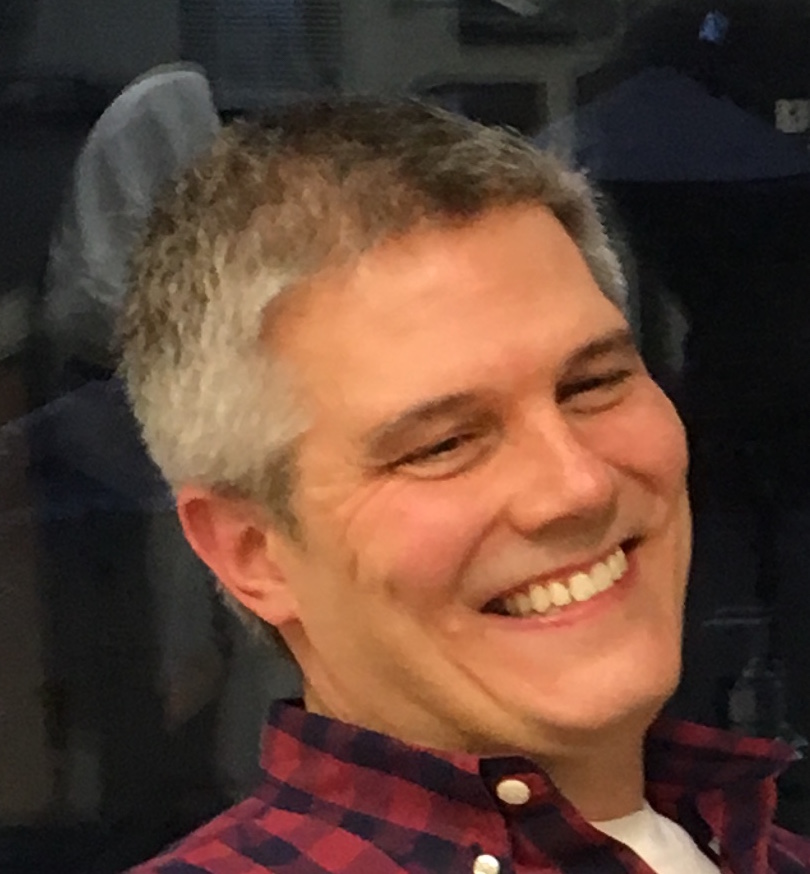
Ian W. Glaaser, PhD
Instructor
Columbia Univ, NY. PhD in Pharmacology & Molecular Signaling
Project: Investigating the structural and molecular determinants of GIRK (Kir3) and Kir4 channel gating and modulation.
ian.glaaser@mssm.edu

Emma Young, MS
PhD Student in GSBS Disease Mechanisms and Therapeutics (DMT)
Northeastern Univ, MA. BS in Cell and Molecular Biology & MS in Bioinformatics
Project: The focus of my project is to elucidate the role GIRK2 ion selectivity plays in Keppen-Lubinsky Syndrome, and leverage it to design selective inhibitors. This is done through a combination of structural biology techniques, functional work, and AI-guided drug discovery.
emma.young@icahn.mssm.edu

Teague Dilgen, BA
PhD Student in GSBS in Disease Mechanisms and Therapeutics (DMT)
Hunter College, NY: BA in Human Biology
Project: Structure-function studies of G-protein-gated inwardly rectifying potassium channels and their pathologies
teague.dilgen@icahn.mssm.edu

Gauri Kulkarni, PhD
Postdoctoral Fellow, Dept. of Neuroscience
University of Illinois Chicago - PhD in Biomedical Sciences
Project: Functional characterization of GIRK channel variants associated with Keppen-Lubinsky syndrome (KLS) and evaluation of novel compounds from NCATS for their activity and selectivity across GIRK channels using whole-cell patch-clamp electrophysiology
gauri.kulkarni@mssm.edu

Joseph Gordon, BA
Research Technician
Reed College, BA in Psychology
Project: I do whole-cell electrophysiology for several projects, including investigating GIRK2 channelopathies, Kir4.1 alcohol pharmacokinetics, and testing experimental GIRK1-2 activators.
joseph.gordon@mssm.edu
Funding





For information about the possibility of joining our team, please contact:
Paul A. Slesinger, PhD
Lillian and Henry M. Stratton Professor of Neuroscience
Senior Associate Dean for Student and Postdoctoral Affairs
Director, Center for Neurotechnology & Behavior
paul.slesinger@mssm.edu
Linkedin